

Most of us only see great Renaissance paintings in museums, churches or postcards. But what if you could find them inside a modern home too? Artists have been reimagining these masterpieces, as mosaic art, in stone and glass, for centuries and the results fit beautifully into modern spaces.
Renaissance art does more than enrich a modern space. It brings a sense of harmony, balance and a deep interest in what it means to be human that defines the art of that period. At MEC, that’s what we aim to bring into your space, something both grand and soul-stirring.
In this blog, we’ll explain how a painting becomes a mosaic, the choices artists make along the way, which materials work best, and why mosaic art is a natural fit for classical art in modern spaces.
Table of Contents
Can Renaissance Paintings Be Turned Into Mosaic?

Yes, they can. Artists have been translating popular paintings into mosaic art for over 400 years. One example is St. Peter’s Basilica in Rome where the artworks above the altars are actually mosaic interpretations of famous paintings.
The damp air inside the church was damaging the originals so they were replaced with mosaics, which are far more resilient.
A workshop of mosaic artists had worked in the basilica since the late 1500s and in 1727 Pope Benedict XIII made it permanent as the Vatican Mosaic Studio. Today roughly 10,000 square metres of mosaic adorn the church and the studio still looks after it.
Leonardo da Vinci’s The Last Supper, made by Giacomo Raffaelli, is another famous case. Napoleon commissioned it, but it was completed after he lost power and eventually found its way to a church in Vienna, where it still hangs. A mosaic rendition of Raphael’s Transfiguration also continues to grace St Peter’s Basilica.
These examples show how great paintings have been translated into the timeless language of mosaics for centuries. They transform fragile painted surfaces into works made to endure.
Here at MEC, the story we tell through mosaic continues that tradition. But instead of a basilica we bring its splendor into contemporary homes and spaces. In our recent poolside project in Dallas, we shaped Renaissance scenes to the walls, light and architecture of the room.
Why Does Renaissance Art Work So Well as Mosaic Art?
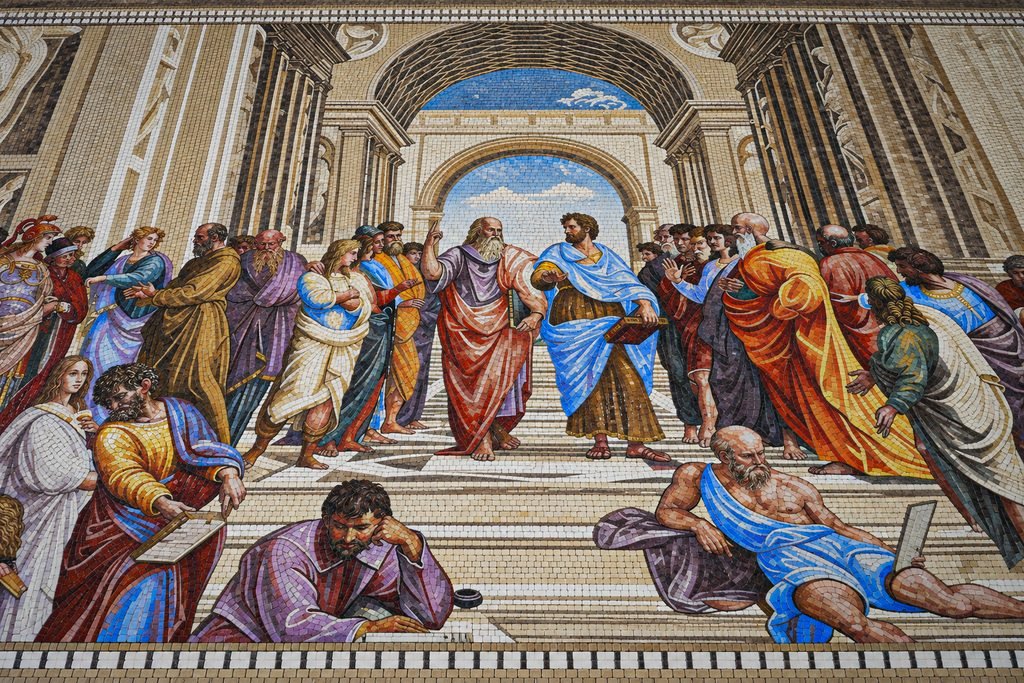
Renaissance art works well in mosaic because it is built on structure. Painters like Raphael and Leonardo planned pictures like architects. Here is why that translates so well:
- Structure: They used perspective, which makes a flat wall look deep and arranged figures clearly to guide the eye. This plan survives when the painting is rebuilt from small pieces.
- Light: Renaissance artists shaded faces and cloth in smooth steps from light to dark and different tones of marble and glass can closely echo those steps.
- Durability: Unlike paint, stone and glass don’t fade the way pigment can. So a Renaissance rendering can stay vivid for generations.
- Scale: Many Renaissance works were made for huge walls and ceilings, Michelangelo’s Sistine Chapel ceiling being the most famous, and mosaic art is well suited to large surfaces.
How Are Mosaics Made From Renaissance Paintings?
So, how are mosaics made? Turning a Renaissance painting into mosaic art is much like translating a book into another language. The meaning remains the same but the tools are different. You can’t simply copy the original, you have to recreate it using an entirely different medium. Here’s how the process works.


Studying the Original and Simplifying the Tones
First, we study the original artwork, paying close attention to its color, composition and finer details such as facial features and hands.
Next, we simplify the tones. While painting blends colors through soft shading, mosaics use separate pieces called tesserae, so the shading has to be broken down into carefully controlled steps from light to dark.
For example in painting a cheek might gradually fade from pink to shadow. In a mosaic, this transition is recreated using several carefully chosen shades.
Choosing the Size of Tesserae
Next, we plan the finer details by choosing the right size of tesserae. Smaller pieces help capture delicate features such as faces and hands while larger ones work well for clothing and backgrounds.
This is an approach Roman mosaic artists used too, balancing the size of each piece with the level of detail required.
Following the Andamento
In mosaic art, the direction in which the rows of tesserae flow is called, andamento. A skilled mosaic artist shapes and positions each piece, adjusting its size, angle and tone as the work takes form.
If you look closely, you’ll notice how the andamento creates flowing rows that guide the eye around the image, following the curve of a cheek, the folds of a robe or the line of an arch.
Planning and Installation
Finally, the mosaic is checked against the original painting and mapped into sections for accurate placement and preservation of its details. Adjustments are also made to account for the room’s lighting and viewing distance, so the finished mosaic art looks right in its intended space.
Which Materials Work Best for Renaissance Mosaic Art?
The two main materials in Renaissance mosaic art are marble and glass, and each does a different job. Marble is a natural stone, so its color shifts slightly from piece to piece, creating a look that a printed image simply can’t replace.
Its soft tones and fine veining make it an excellent choice for depicting skin, fabric, shadow and the earthy colors Renaissance painters loved. Glass, on the other hand, brings light and rich colors from deep blue and red to shimmering gold.
Its shiny surface catches light differently throughout the day, making it ideal for skies, halos, jewel colored robes and anything that needs to glow. We also work with Venetian-style glass and gold glass to create luminous areas.
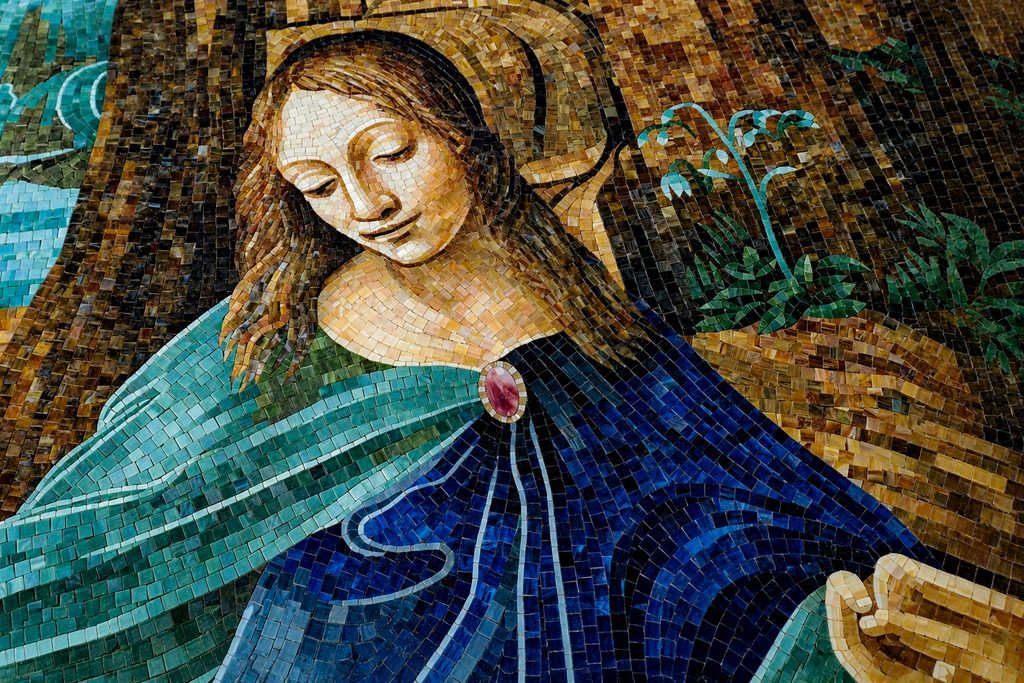
You don’t have to choose between the two. A designer might use marble where an image needs softness such as faces and glass where it needs sparkle, creating a striking contrast and added depth. Because our figurative work is hand-cut, each piece can be shaped to follow the artwork.
Location matters too. In a poolside room, for example, the exact glass, backing, adhesive, underlying surface and the grout must all be chosen to suit the conditions of the space. Our materials guide for mosaic tiles explains how to match materials to different settings.
Is Mosaic Art a Good Fit for Contemporary Spaces?
Unlike a print, which can feel like a copy of the original, a mosaic painting reimagines classical imagery in a textured and structured medium that complements modern architecture. It bridges the gap between classical art and contemporary spaces through its permanence, architectural integration and pixel-like structure. Here’s why:
Ancient-Modern Bridge
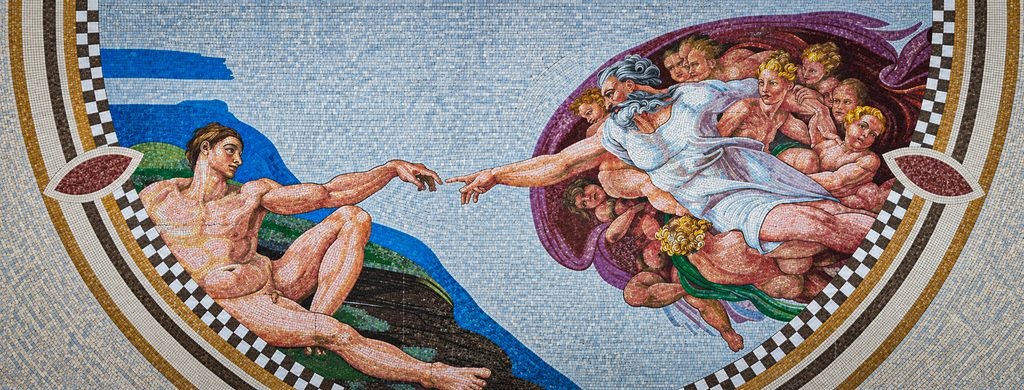
- Pixel-like structure: Much like a digital image built from pixels, a mosaic comes together through individual tesserae. This gives the familiar classic a graphic and contemporary edge allowing Raphael’s serene portraits or Michelangelo’s The Creation of Adam to look strikingly fresh as a mosaic portrait.
- Textural-Contrast: Modern architecture often favors smooth surfaces like concrete, glass and steel. The slightly irregular surface of tactile mosaics adds warmth and depth to the space without cluttering the clean lines.
- Material Range: Classical mosaic art was traditionally made using marble and glass and these materials remain just as relevant today. Polished marble and luminous glass suit contemporary interiors just as beautifully as they once did churches.
Architectural Integration
- Part of the wall: A painting hangs on a wall but mosaic wall art becomes part of it. This makes it particularly suited to contemporary designs where artwork can be built into floors, courtyards, feature walls and even showers.
- Interaction with light: Light hits each piece of hand-cut tessera differently because the pieces sit at slightly different angles. In a room with large windows, this means the artwork can look different throughout the day, with gold glass being a particularly striking example.
- Scale and Adaptability: Classical themes often call for grand compositions and mosaics can cover expansive feature walls or follow curved architectural surfaces. This flexibility has long been seen in church apses and domes.
The Feeling Behind the Art
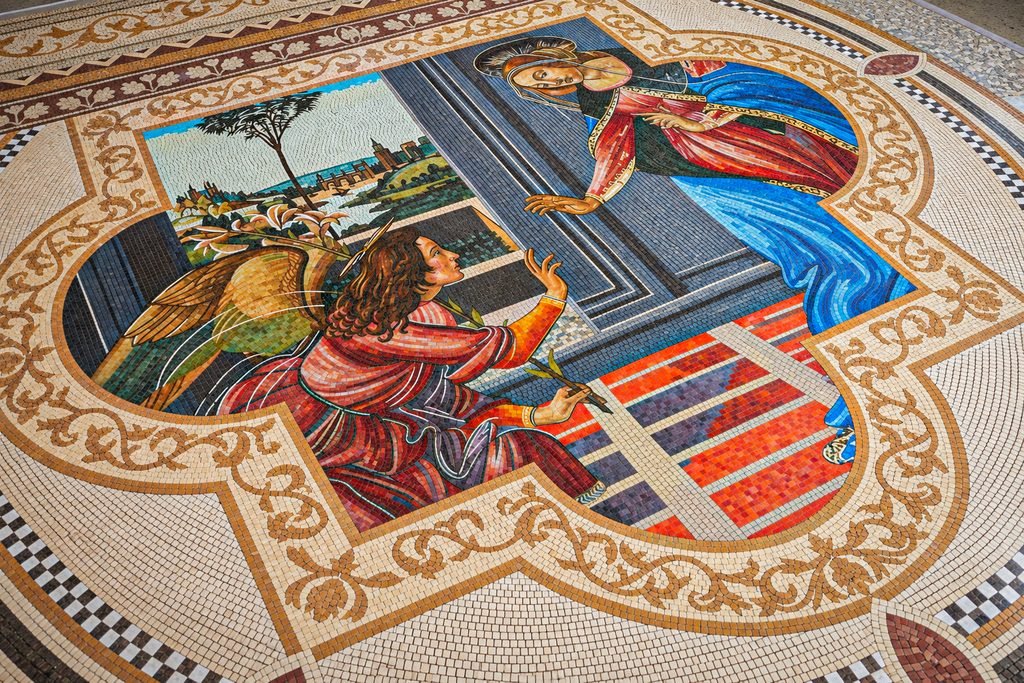
Renaissance artists weren’t simply trying to show the viewers a scene. They often wanted to make them feel something too. Art historians describe the art of the period through its balance, geometric harmony and enduring fascination with the human experience.
Take The School of Athens, for example. It celebrates knowledge and clear thinking through its calm, orderly setting. The Creation of Adam evokes awe through expressive movement, with the nearly touching fingers carrying much of the drama.
Then there’s The Last Supper, which captures a moment of shared shock through expressions and gestures of those around the table. Reimagined as mosaic art, these works bring more than harmony and vibrant colors into a modern home. They also carry the emotions and ideas that made them timeless.
Where Can Renaissance Mosaic Art Go in a Home?
Mosaic wall art can go into more places than you might think. Famous Renaissance paintings like The School of Athens and The Last Supper are well suited to feature walls in dining rooms or living rooms, where there is enough space to step back and take them in.
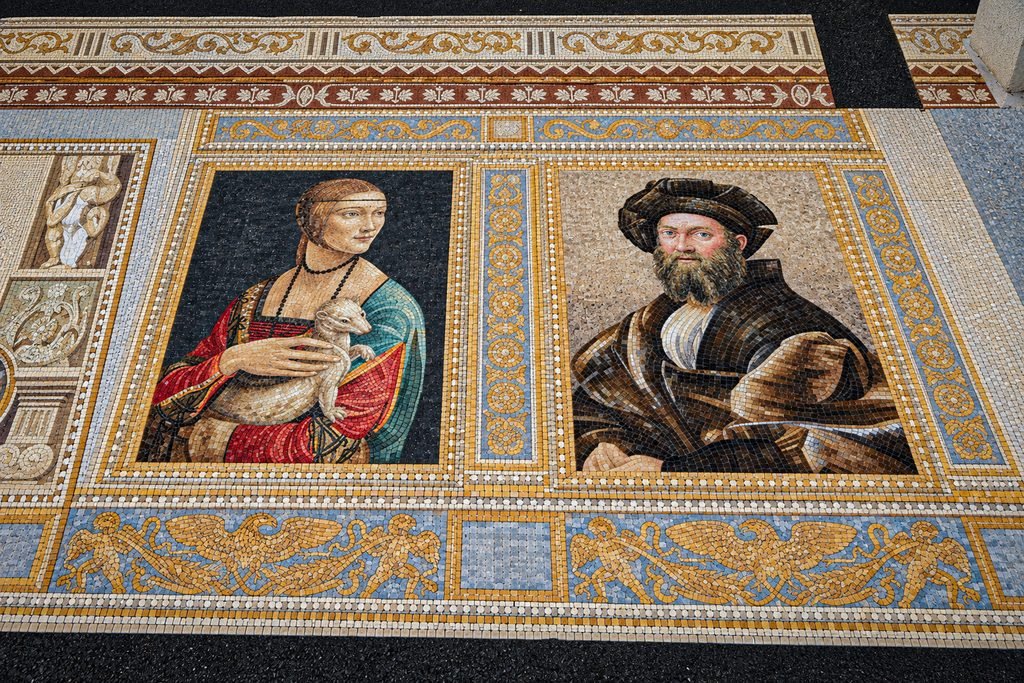
Landings, staircases and alcoves are also ideal for statement pieces giving people something to admire as they walk by. Smaller, more intimate mosaic portraits, such as Lady with an Ermine or Baldassare Castiglione, fit naturally into studies, libraries, lounges or dressing rooms, where you can take the time to appreciate their details.
Walls and ceiling create a more immersive experience, as we did in our Dallas project.
Some practical things to consider before choosing a spot
| Consideration Factor | Key Aspect | Impact / Details |
| Ceiling Height | Artwork Scale | Directly affects how big the artwork can be. |
| Lighting | Material Reflection | Changes how materials like stone and glass reflect light in the space. |
| Viewing Distance | Detail Fine-Tuning | Decides how intricate and fine the details of the piece need to be. |
| Environment | Material Durability | Outdoor spaces or pools require careful selection of surface materials and grout to resist heat, humidity, and moisture. |
Final Thoughts
Renaissance art and mosaic art have a lot in common. Both value craftsmanship, meticulous planning and enduring beauty.
A good piece of mosaic art isn’t just a perfect copy of a painting. It honors the original while becoming an artwork in its own right. Whether it’s a single portrait in a library or a collection of scenes wrapped around a pool, the goal remains the same: to bring classical art into the way people live today. Feel free to explore our Renaissance mosaic project or reach out to our designers to discuss your space.
Frequently Asked Questions
Can any painting be made into mosaic art?
Almost any painting can be reimagined as mosaic art, but some are easier to adapt than others. Works with broad shapes, clear focal features are simpler while softer or very detailed paintings need more delicately cut tesserae and more space. Our designers analyze each artwork before deciding on the approach, whether it’s a portrait or a large custom mosaic mural.
Is a mosaic painting more enduring than a traditional painting?
Stone and glass do not fade easily the way paint can, so a well made and well installed mosaic can last for generations. The right materials and surface preparations are crucial along with consistent care, especially in places of high humidity.
Can Renaissance mosaic art be of any size?
Because all the mosaics are custom they can be shaped into the space. From a small niche to a large feature wall or even a ceiling. For exact limits and options, it is best to talk to our designers.
How long does custom Renaissance mosaic art take?
There is no single answer for this. It depends on the scale of the project, the size of tesserae, the level of detail, the materials and the number of revisions. Once the artwork and dimensions are decided, the timeline can be set.